




Best Mercedes Sprinter Insurance in Texas: Get Instant Quote
Published: January 28, 2026
The Mercedes-Benz Sprinter is not merely a vehicle; it is a significant capital investment and often the backbone of logistics, passenger transport, or luxury travel businesses across Texas. Whether you are operating a fleet for last-mile delivery, running a luxury shuttle service, or have converted a 2500 High Roof into a mobile "van life" residence, insuring these vehicles requires a sophisticated understanding of risk management. Standard personal auto policies often fail to capture the nuances of a Sprinter, leaving owners exposed to significant financial gaps in the event of a collision or liability claim.
From the bustling highways of Houston to the remote roads of West Texas, the operational risks vary immensely. As an owner, you aren't just looking for the cheapest premium; you are looking for technical accuracy in underwriting to ensure your high-value asset—and the cargo inside it—is genuinely protected. This technical analysis delves into the specific requirements for Mercedes Sprinter insurance in Texas, dissecting the difference between commercial and personal lines, and how to secure the most comprehensive coverage without overpaying.

1. The Technical Classification: Why Sprinters Are Different
The primary challenge in insuring a Mercedes Sprinter lies in its classification. Unlike a standard sedan or a light-duty pickup truck, the Sprinter straddles the line between a consumer vehicle and a commercial heavy-duty truck. Insurance carriers determine rates based on Gross Vehicle Weight Rating (GVWR) and intended usage, and this is where many Texas owners make critical errors during the application process.
Gross Vehicle Weight Rating (GVWR) Implications Most Sprinter models (2500, 3500, 3500XD, and 4500) have distinct GVWRs. If your Sprinter’s GVWR exceeds 10,001 pounds, it is technically classified as a Commercial Motor Vehicle (CMV) by federal and Texas state standards when used for business. This triggers a requirement for higher liability limits and often necessitates a commercial auto policy, even if the vehicle is occasionally used for personal errands. Misclassifying a Sprinter 3500 as a personal commuter vehicle to save on premiums is a common cause for claim denial.
The "Upfit" Factor A "stock" Sprinter is rarely what hits the road. Whether it is outfitted with $50,000 worth of shelving and refrigeration for a catering business, or custom cabinetry for a camper van, these modifications are not covered under standard Blue Book value assessments. Specialized equipment coverage is mandatory to protect the added value. A standard policy will only replace the chassis and the shell, leaving you with a total loss on the interior build-out if not properly endorsed.
Repair Cost Variance Mercedes-Benz engineering utilizes proprietary parts and complex sensor arrays (ADAS) in the front bumpers and windshields. The cost to repair a Sprinter after a minor front-end collision is statistically 40-60% higher than domestic cargo vans like the Ford Transit or Ram ProMaster. Underwriters factor this "cost to cure" into the premium, meaning your deductible selection plays a massive role in your overall rate structure.
2. Essential Coverage Layers for Texas Drivers
Navigating Texas insurance laws requires a strategic approach to liability and physical damage coverage. The state minimums are insufficient for a vehicle of this size and value. Below is a breakdown of the coverage layers that a prudent Sprinter owner must secure.
Liability Limits: Moving Beyond State Minimums Texas law requires a minimum of 30/60/25 ($30k bodily injury per person, $60k per accident, $25k property damage). For a Mercedes Sprinter, which is heavy and capable of causing massive damage in a collision, $25,000 in property damage is negligible. If your Sprinter rear-ends a modern luxury SUV or hits a piece of public infrastructure, you will exhaust that limit instantly. Experts recommend a minimum Combined Single Limit (CSL) of $100,000 or typically $1,000,000 for commercial delivery operations to protect business assets from litigation.
Comprehensive and Collision Given the high center of gravity, Sprinters are susceptible to wind damage and rollover risks, particularly on open Texas highways. Comprehensive coverage is vital not just for theft or hail (a major issue in Texas), but for glass damage. The windshield of a Sprinter often houses cameras for lane-keeping assist and rain sensors. Replacing and recalibrating a Sprinter windshield can cost upwards of $1,500. Ensure your policy includes full glass coverage with a reasonable deductible.
Uninsured/Underinsured Motorist Protection (UM/UIM) Texas has a high rate of uninsured drivers. If a driver without insurance totals your $70,000 Sprinter, your financial recovery relies entirely on your UM/UIM coverage. Do not waive this coverage. It acts as a safety net for your capital investment when the at-fault party is insolvent.

3. Risk Factors That Spike Your Premiums
When generating a quote for a Mercedes Sprinter, underwriters utilize a complex algorithm. Understanding these variables allows you to adjust your operations or policy structure to secure a more favorable rate.
Operational Radius
Commercial policies heavily weigh the "radius of operation." A Sprinter used strictly for local deliveries within a massive metroplex like Houston or Dallas (typically under a 50-mile radius) will generally have a lower premium than a vehicle engaged in "long-haul" operations across state lines. If your business model allows, keeping your declared radius accurate and tight can result in substantial savings.
Cargo Type and Hauling
What is inside the Sprinter matters as much as the van itself. Hazmat transport, expedited freight, or passenger transport (shuttles) carry significantly higher risk profiles than a Sprinter used by a plumber carrying tools. Passenger transport, in particular, requires high-limit medical payment coverage and liability, often mandated by federal filings.
Driver Experience and CDL Status
While a CDL isn't always required for Sprinters under 26,000 lbs GVWR, having drivers with a Commercial Driver’s License (CDL) or clean commercial driving records can lower premiums. Conversely, putting a 21-year-old driver with a standard Class C license behind the wheel of a high-roof, extended-wheelbase Sprinter is a red flag for insurers due to the increased risk of clearance-related accidents (hitting overhangs/bridges).

4. Market Evaluation & Trusted Provider
The market for insuring Mercedes Sprinters in Texas is bifurcated. You have direct-to-consumer carriers who often struggle to properly endorse modified vans, and you have independent agencies that specialize in commercial lines. For Sprinter owners, the DIY approach online often results in "coverage gaps"—specifically regarding the exclusion of permanently attached equipment or business interruption.
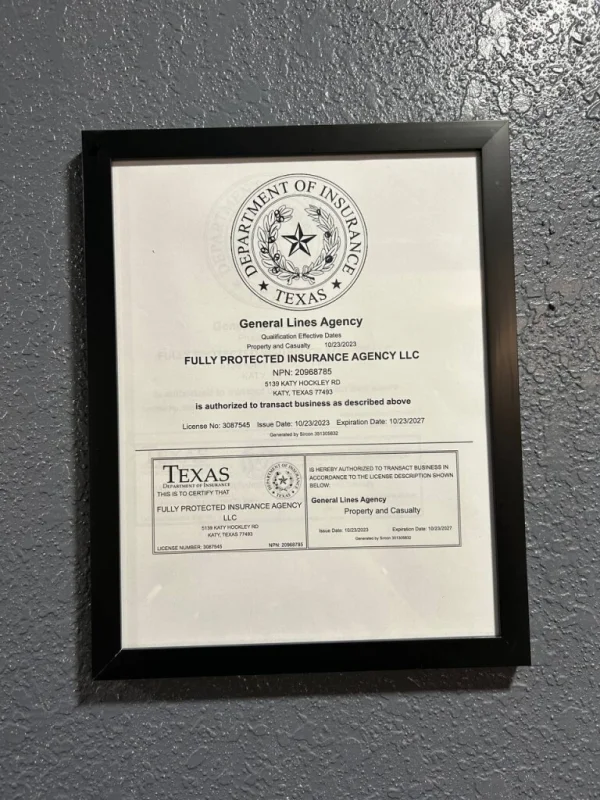
It is crucial to work with an agency that understands the specific VIN decodes of Mercedes commercial vehicles. Fully Protected Insurance has demonstrated a robust capability in this niche. They do not merely quote a price; they analyze the Gross Vehicle Weight, the specific upfit value, and the operational usage to match the driver with the correct carrier—whether it be Progressive Commercial, Travelers, or specialized surplus lines for high-risk ventures.
Their agents are trained to distinguish between a "Van Life" recreational policy and a "Last Mile Delivery" commercial policy, ensuring that when a claim is filed, it is actually paid. They serve the entire state of Texas, providing tailored solutions that account for the unique weather and traffic risks of the region.
Get Your Instant Sprinter Insurance Quote Here
5. Final Recommendation
Do not treat your Mercedes Sprinter like a standard economy car. The financial exposure regarding liability and physical repair costs is too high to rely on budget-tier, automated insurance products. Review your current policy today. Check your liability limits, verify your equipment endorsements, and ensure your usage classification matches reality. Securing the right coverage now prevents catastrophic financial loss later. Contact a specialized agent to lock in a rate that balances cost with comprehensive protection.
6. FAQ - Technical Queries
Is "Van Life" Sprinter insurance different from RV insurance?
Yes. A DIY converted Sprinter is often difficult to insure as a standard RV because it wasn't manufactured by a certified RV builder. You need a specialized "converted vehicle" policy or a commercial policy with custom equipment endorsements to cover the cost of the interior build, solar panels, and plumbing.
Does my personal auto policy cover me if I use my Sprinter for Amazon Flex?
No. Standard personal auto policies contain a "livery and delivery" exclusion. If you are using your Sprinter to deliver packages for Amazon, FedEx, or other logistics brokers, you are driving uninsured unless you have a Commercial Auto Policy specifically rated for courier/delivery work.
Why is Mercedes Sprinter windshield insurance so important?
Sprinter windshields are nearly vertical and cover a large surface area, making them magnets for rocks and debris. Furthermore, they contain ADAS (Advanced Driver Assistance Systems) sensors. A replacement isn't just glass; it involves recalibrating the safety computers, pushing costs well over $1,000. Ensure your comprehensive deductible is low enough to make claiming this viable.
What is the "radius of operation" rule for commercial Sprinters?
Insurers rate risk based on how far the vehicle travels from its garaging address. Common brackets are 0-50 miles, 51-200 miles, and unlimited/long-haul. Misrepresenting this (e.g., claiming local use but driving from Dallas to El Paso regularly) constitutes material misrepresentation and can lead to claim denial.