



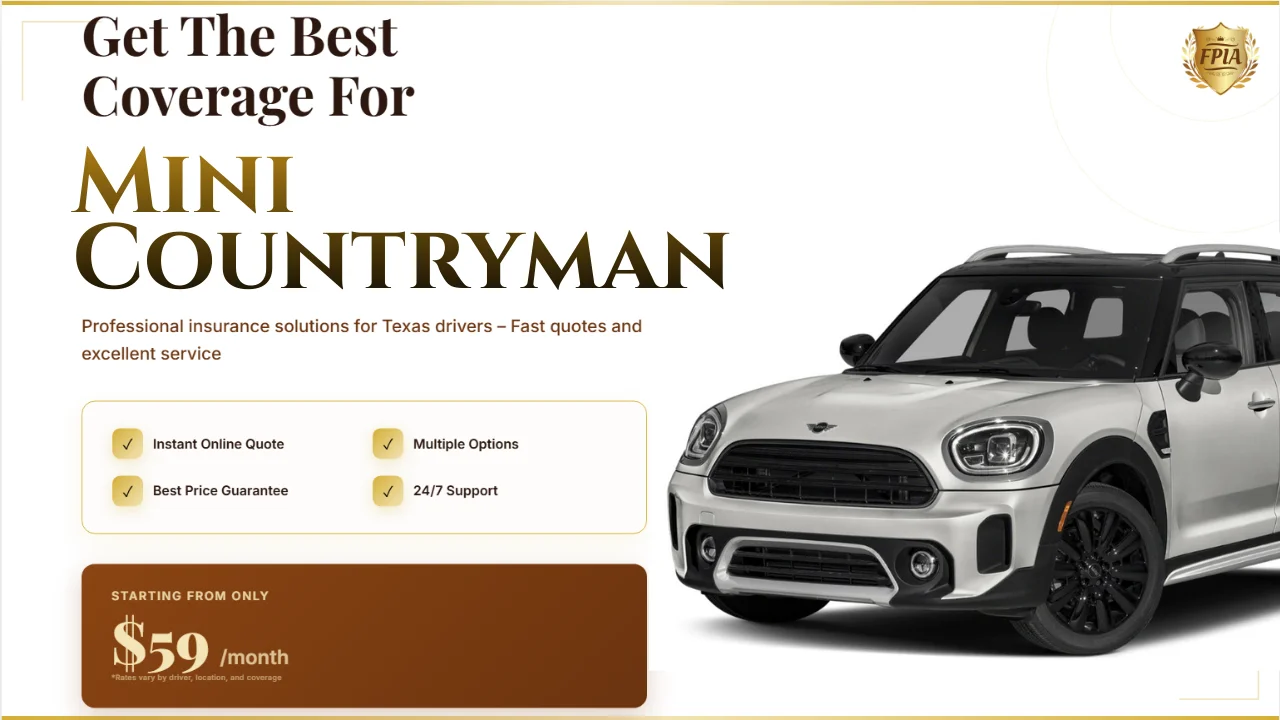
Best Mini Countryman Insurance in Texas: Get Instant Quote
Published: January 28, 2026
Jenna and David, a couple in their early 30s living in San Antonio, were thrilled with their new Mini Countryman. It was the perfect blend of her love for Mini's quirky style and his need for space for weekend camping gear and their golden retriever, Max. But when their renewal notice arrived, the premium had spiked without explanation. They felt stuck—was this just the cost of owning a small SUV in Texas, or were they missing a better way? If you're a practical yet style-conscious driver like them, navigating the insurance market for a versatile vehicle like the Countryman can be confusing. This comparative review breaks down the real-world options, cutting through the marketing to show you how to get the protection your active Texas lifestyle needs without overpaying.

Understanding Your Mini Countryman's Insurance Profile in Texas
The Mini Countryman occupies a unique niche that can confuse standard insurance algorithms. It's classified as a small SUV or crossover, which generally benefits from slightly lower rates than sports cars but can be viewed differently than a standard Mini Cooper. Its all-wheel-drive capability, a popular option for Texas buyers who venture to hill country or deal with occasional rain-slicked roads, can sometimes net a small safety discount. However, its premium branding and higher purchase price than a mainstream compact SUV mean repair costs for its distinctive body panels and interior trim are higher. In Texas, factors like your primary use (city commuting in Houston vs. rural road trips), garage situation, and the vehicle's safety features all weigh heavily in determining whether insurers see it as a fun, safe family hauler or an overpriced hatchback.

Comparative Review of Insurance Approaches for the Countryman
Let's compare the three primary ways drivers shop for insurance, evaluating each on price, coverage quality, and service for a Texas Countryman owner.
1. The DIY Online Discount Route (e.g., GEICO, Progressive Online)
Pros: This path offers undeniable initial speed and often the lowest advertised premiums. The quoting process is fully automated, and for a driver with an excellent record and a common vehicle, it can be efficient. You might get a competitive base rate quickly.
Cons: The system treats your Countryman as data points, not a unique vehicle. It may undervalue the need for OEM parts or lack understanding of its specific safety features. When you have a claim, especially one involving the Countryman's unique styling or all-wheel-drive system, you are dealing with a call center, not an advocate. This model often fails at the "service" and "tailored coverage" aspects.
2. The Brand-Name Local Agent (e.g., State Farm, Allstate Agent)
Pros: You get a local, licensed professional you can meet face-to-face in Texas. They can explain coverage nuances, help you bundle policies, and may have more leverage to fix errors or advocate within their single company. They understand local risks like hail and flooding.
Cons: You are limited to that one company's products, rates, and claims network. If their underwriters have decided Mini Countrymans are risky in your ZIP code, your agent can't shop elsewhere. Their repair network might not include a Mini-certified shop, leading to potential conflicts over repair quality.
3. The Independent Agency Advocate
Pros: This approach provides the most comprehensive comparison and personalized service. An independent agent works for you, not a carrier. They can shop your profile with multiple "A"-rated companies simultaneously, including regional carriers that might offer better rates for crossover SUVs. They are experts at matching your specific needs (e.g., high mileage for road trips, need for rental coverage) with the right policy.
Cons: It may take slightly longer to get quotes from multiple carriers, and the initial point of contact requires a conversation rather than just a website form. The very best independent agents are selective and work by consultation.

Key Coverage Comparisons: What Truly Matters for Your Countryman
Beyond the provider type, compare these critical coverage details side-by-side when reviewing quotes.
Liability Limits: State Minimum vs. Texas-Reasonable. Placing these side-by-side is alarming. Texas minimums (30/60/25) could be exhausted by a single emergency room visit. A "Texas-Reasonable" limit of 100/300/100 provides a responsible level of protection for your assets, especially when driving a vehicle often used for family activities.
Comprehensive Deductible: High vs. Sensible. A $2,500 deductible might lower your monthly bill by $15. But when a hailstorm in Lubbock or a rogue shopping cart in Dallas causes $2,000 in damage, you pay it all. A $500 or $1,000 deductible, while costing slightly more monthly, provides realistic financial protection.
Parts Usage: Aftermarket vs. OEM Guarantee. Many policies default to aftermarket parts. For a Countryman's distinctive headlights, grille, and interior components, this can compromise fit and finish. A policy with an OEM parts guarantee for the first few years ensures your Mini is repaired with Mini parts, protecting its look and value.
Rental Reimbursement: Basic vs. Robust. Basic coverage of $30/day for 3 days is insufficient if your Countryman is in a specialized shop. Robust coverage of $50/day for 30 days ensures you have a comparable vehicle for your family and gear during repairs.
Final Analysis & The Recommended Path for Texas Countryman Owners
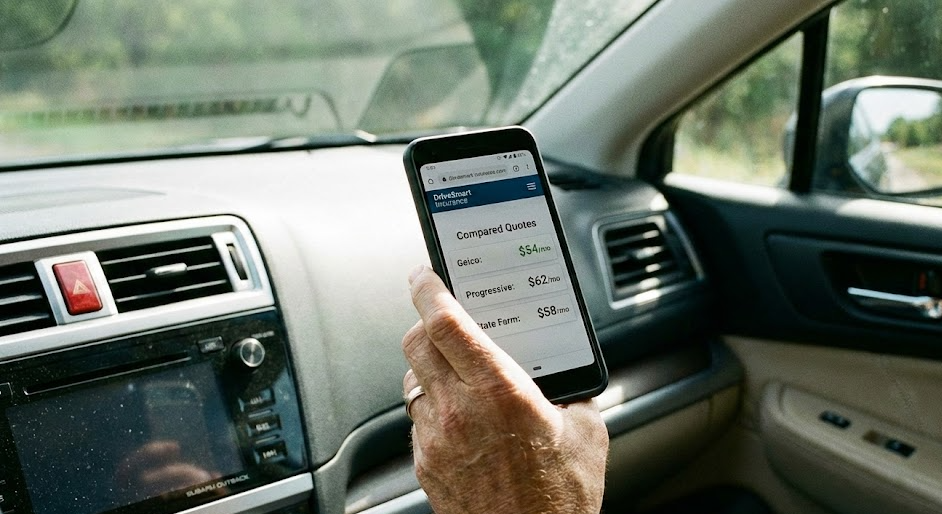
After a thorough comparative review, the independent agency model consistently provides the most balanced value for Mini Countryman owners in Texas. It successfully merges the competitive pricing and choice of the DIY online model with the personalized, local expertise of the captive agent. For a vehicle that straddles categories, having an advocate who can identify the carrier that views it most favorably is a significant advantage. They ensure your policy isn't just a generic small SUV policy but one that acknowledges the Countryman's specific safety features, potential for higher-cost repairs, and your Texas-driven lifestyle. This path transforms insurance from a passive commodity into an active part of your risk management strategy, offering peace of mind for everything from daily commutes in Austin to road trips to Big Bend.
Get Your Comparative Mini Countryman Insurance Quote in Texas
Make Your Informed Choice Today
You've seen the comparison. Now, experience the difference of a tailored approach. Stop wondering if you have the right coverage and connect with a professional who can provide clear, competitive options designed for your Mini Countryman and your life in Texas. Click the link above to start the process and secure your instant, customized quote.
FAQ: Best Mini Countryman Insurance in Texas
Is the Mini Countryman considered an SUV for insurance purposes?
Yes, it is typically classified as a small SUV or crossover. This classification often results in slightly different (and sometimes lower) rates than the smaller Mini Hardtop models, due to statistical data associating SUVs with different driver behavior and safety profiles.
Does the ALL4 all-wheel-drive system affect my insurance rate?
It can, in two ways. First, it may qualify you for a small safety discount, as AWD can improve traction in adverse conditions. Second, it increases the vehicle's value and repair complexity, which can slightly increase comprehensive and collision premiums. The net effect is often minimal but positive from a safety standpoint.
We use our Countryman for weekend trips and light off-pavement driving. Does this affect coverage?
You must be honest about your vehicle's use. Standard personal auto insurance covers "occasional" off-road use on established trails (like forest service roads). However, intentional off-roading, rock crawling, or use in competitions would not be covered and could void your policy. Discuss your specific activities with your agent.
Are there any discounts specific to the Countryman's safety features?
Yes. The Countryman often comes with advanced safety tech like forward collision warning, automatic emergency braking, and lane departure warning. Many insurers now offer discounts for these features. Provide your agent with your exact trim level and options so they can apply all eligible discounts.