




Cheap Chevrolet Trailblazer Insurance Texas: SR22 & No License OK
Published: January 28, 2026
Warning: These 5 mistakes cost Chevrolet Trailblazer owners in Texas an average of $1,800 per year in unnecessary insurance premiums. If you need SR22 filing or don't have a valid license, these errors become even more expensive—and more common.
I've reviewed hundreds of Trailblazer insurance policies for drivers in difficult situations. The patterns are clear. Make these mistakes and you'll overpay dramatically. Avoid them and you'll secure affordable coverage even with SR22 requirements or license issues.
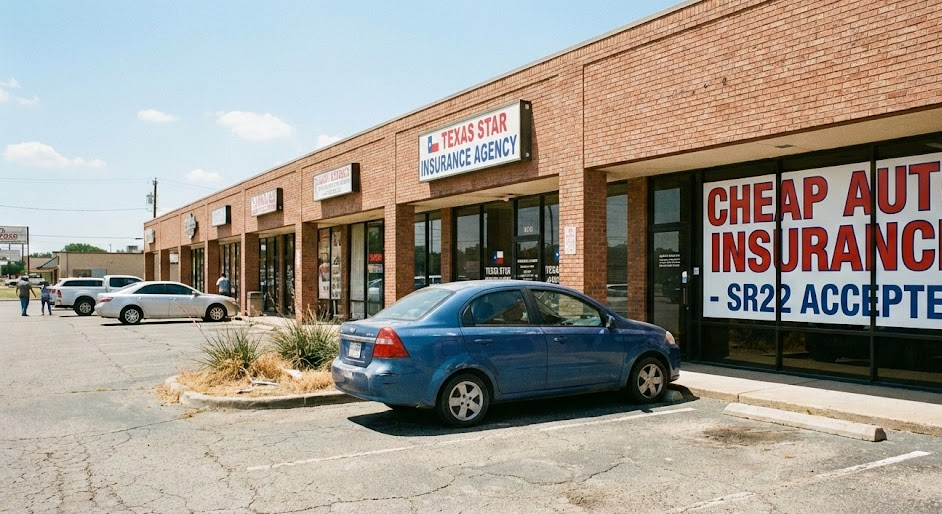
Mistake #1: Buying Full Coverage You Don't Need
This is the biggest money drain I see. A driver with a 2008 Trailblazer worth $6,000 paying $285/month for full coverage is wasting roughly $1,500 annually compared to liability-only coverage at $155/month.
Here's the math that kills your budget: Full coverage costs about $3,420 per year. Your vehicle's worth $6,000. Your deductible is $1,000. If you total the vehicle, the insurance pays out $5,000 (vehicle value minus deductible). You paid $3,420 in premiums to potentially receive $5,000. That's only a $1,580 benefit, and that's IF you total the car that year.
Meanwhile, liability-only coverage costs about $1,860 per year for the same driver. You're paying $1,560 less annually. After two years, you've saved $3,120—more than half the vehicle's value—by skipping collision and comprehensive coverage you statistically won't use.
The break-even rule: If your vehicle is worth less than 8-10 times your monthly full coverage premium, go liability-only. For example, if full coverage costs $250/month, only carry it if your Trailblazer is worth at least $20,000-$25,000.
Mistake #2: Not Shopping Your SR22 Insurance
Accepting the first SR22 quote you receive is like buying the first house you tour—you're guaranteed to overpay. SR22 insurance pricing varies by 40-60% between carriers for identical coverage.
Real example from my files: Same driver, same Trailblazer, same coverage, same SR22 requirement. Quote 1: $312/month. Quote 2: $287/month. Quote 3: $189/month. That's a $123/month difference between highest and lowest—$1,476 annually. Same exact coverage.
Why the massive spread? Different insurers use different risk models. Company A might penalize DUIs heavily but go easier on multiple speeding tickets. Company B does the opposite. Your specific violation history determines which carrier's model works in your favor.
The three-quote minimum rule: Never purchase SR22 insurance without getting at least three quotes from different agencies. This isn't about being difficult—it's about not donating $1,500 per year to an insurance company when you don't have to.
Where to get those three quotes: Two non-standard market specialists (Direct Auto, The General, Acceptance Insurance) plus one independent agency representing multiple carriers. This mix maximizes your chance of finding the best rate.
Mistake #3: Lying or Hiding Information on Your Application
I understand the temptation. You think if you just don't mention that third speeding ticket or "forget" about the accident from two years ago, you'll get a better rate. Here's what actually happens:
The insurance company runs your driving record anyway. They're not taking your word for it. When they discover undisclosed violations (and they will), one of two things happens: They adjust your premium upward immediately, or they cancel your policy for material misrepresentation.
Policy cancellation for lying creates a nightmare scenario. Now you have a cancellation on your insurance record in addition to your original problems. The next insurer sees this and treats you as an even higher risk. Your premium increases by another 20-30% beyond what you would've paid if you'd just been honest in the first place.
Even worse: If you have a claim and the insurer discovers you lied on your application during the claims investigation, they can deny the entire claim AND cancel your policy. You're left holding the bag for thousands in damages because you tried to save $30/month.
The smart play: Disclose everything. Yes, your rate will be higher. But it'll be a real rate you can actually count on, not a fake low rate that disappears the moment the insurer runs your MVR.

Mistake #4: Letting Your Policy Lapse During SR22 Supervision
This is catastrophic. When you have an SR22 requirement, your insurance company monitors your policy continuously. The moment your coverage lapses—even for one day—they're legally required to notify Texas DPS. This triggers:
Immediate license suspension. Not "you have 30 days to fix it." Your license suspends the day DPS receives the lapse notification.
Restart of your entire SR22 period. Had one year left on your 3-year SR22 requirement? Too bad. The clock resets to day zero. You now have 3 full years again once you reinstate.
Significantly higher premiums on your next policy. A lapse during SR22 supervision marks you as the highest-risk category. Your next insurance quote will be 25-40% higher than what you were paying.
Reinstatement fees. Getting your license back after an SR22 lapse costs $100-$200 in Texas reinstatement fees, plus the cost of getting new insurance and filing a new SR22.
Total cost of a policy lapse: Easily $2,000-$3,000 between reinstatement fees, higher premiums, and extending your SR22 period. All to "save" one month's premium payment.
Prevention strategy: Set up automatic payments immediately when you get insured. Use bank draft, not credit cards (cards expire and get replaced, causing failed payments). Set calendar reminders 5 days before each payment as a backup verification. If money gets tight, call your agent to adjust coverage rather than letting the policy cancel.
Avoid These Mistakes - Get Your Trailblazer SR22 Quote Today
Mistake #5: Not Understanding Your Actual Coverage Needs
Many drivers with SR22 requirements either over-insure or under-insure because they don't understand Texas liability law and asset protection. Both errors cost you money.
The under-insurance trap: Texas minimum limits are 30/60/25 ($30k per person injury, $60k per accident injury, $25k property damage). These limits are laughably low in modern accident scenarios. Average bodily injury claim in Texas: $28,000. Serious injury claims easily exceed $100,000. If you cause a $120,000 injury with only $30,000 coverage, you're personally liable for the $90,000 difference.
If you own a home, have savings, or earn decent income, minimum limits expose you to lawsuits that can seize those assets. Increasing to 100/300/100 coverage typically adds only $30-$50/month but protects hundreds of thousands in assets.
The over-insurance trap: Flip side: If you have minimal assets (don't own a home, limited savings, entry-level income), spending extra for higher limits doesn't make financial sense. You can't lose what you don't have. Judgment-proof debtors can carry minimum limits without significant risk since there are no assets to seize anyway.
The coverage decision matrix: Add up your total assets (home equity, savings, investments, retirement accounts). Carry liability limits at least equal to your total assets. If you have $150,000 in assets, carry at least 100/300/100 limits. If you have under $10,000 in assets, state minimums provide sufficient protection without overpaying.
Critical Actions to Avoid These Mistakes
Here's your action plan to sidestep these five costly errors:
For full coverage decisions: Calculate your vehicle's actual cash value using Kelley Blue Book. Compare to your annual premium cost. If the vehicle's worth less than 2-3 times your annual premium, switch to liability-only immediately.
For quote shopping: Block out 2 hours. Call three different agencies. Take detailed notes on coverage offered, monthly cost, down payment, and total annual cost. Don't commit during the first call—finish all three, then compare.
For honest disclosure: Pull your official Texas driving record before calling insurance companies. When you know exactly what's on your record, there's no guessing or "forgetting." Give the agent the actual MVR to quote from.
For lapse prevention: Enable automatic payments today. Add 3 calendar reminders on your phone: 7 days before payment, 3 days before payment, day of payment. This triple-layer alert system catches payment failures before they become lapses.
For coverage level decisions: List all your assets and their values. Add them up. Use that number to determine appropriate liability limits. If unsure, pay the $30/month extra for higher limits—it's cheap asset protection.

FAQ: Avoiding Insurance Mistakes
I already made Mistake #2 and bought the first quote. Can I still switch?
Yes, absolutely. You can switch insurance companies anytime. Call a new agency, get a better quote, purchase it with a start date the day after your current policy ends. Just ensure no gap in coverage if you have SR22 requirements.
What if I genuinely can't remember all my violations for disclosure?
Order your official driving record from Texas DPS ($20, instant online). This shows everything. Give this to the insurance agent to quote from—now you're certain nothing is missed.
My policy already lapsed once during SR22. How bad is the damage?
It extends your SR22 period and raises your rates, but it's not permanent. Get new coverage immediately, maintain it continuously for 12+ months, and you'll see rates gradually decrease again. The key is no additional lapses.
Can I reduce coverage limits mid-policy if I realize I over-insured?
Yes, most insurers allow mid-term policy adjustments. Call your agent, request the change, and they'll recalculate your premium. You may receive a small refund for the unused premium on the higher coverage.