




Cheap Chevrolet Trax Insurance Texas: SR22 & No License OK
Published: January 28, 2026
The Chevrolet Trax presents a specific actuarial profile within Texas non-standard auto insurance markets. As a subcompact crossover with model years spanning 2013-present, underwriting considerations differ substantially from traditional sedan classifications. For high-risk drivers requiring SR22 certificates or operating without valid licenses, understanding the technical insurance landscape for this vehicle becomes critical.
Texas regulatory framework mandates minimum liability coverage of 30/60/25 while simultaneously requiring SR22 supervision for designated high-risk operators. The intersection of these requirements with Trax-specific rating factors creates a complex premium structure that varies significantly between carrier underwriting models.

Vehicle-Specific Risk Factors in Insurance Rating
The Trax occupies a unique position in insurance actuarial tables due to several technical characteristics:
Safety rating impact on base premiums: IIHS testing shows 2015-newer Trax models achieving "Good" ratings in most crash categories. This designation typically reduces bodily injury liability premiums by 6-9% compared to vehicles with "Marginal" or "Poor" ratings. However, SR22 surcharges overwhelm this advantage—the high-risk driver classification creates premium increases of 55-85%, negating vehicle-specific safety discounts.
Theft frequency and comprehensive coverage pricing: NICB data places the Trax in the moderate theft risk category for Texas metro areas. Comprehensive coverage annual premiums for standard-risk operators average $520-$710. SR22-required policies see this increase to $850-$1,180 annually. ROI analysis: For Trax models valued under $12,000, the comprehensive premium-to-value ratio exceeds industry-recommended thresholds of 8-10%.
Crossover classification vs sedan classification: Insurance rating algorithms treat crossovers differently than sedans despite similar sizes. Trax classification as "small SUV" rather than "subcompact car" triggers slightly elevated comprehensive rates (estimated 4-7% higher) due to perceived increased repair costs for AWD-equipped models.
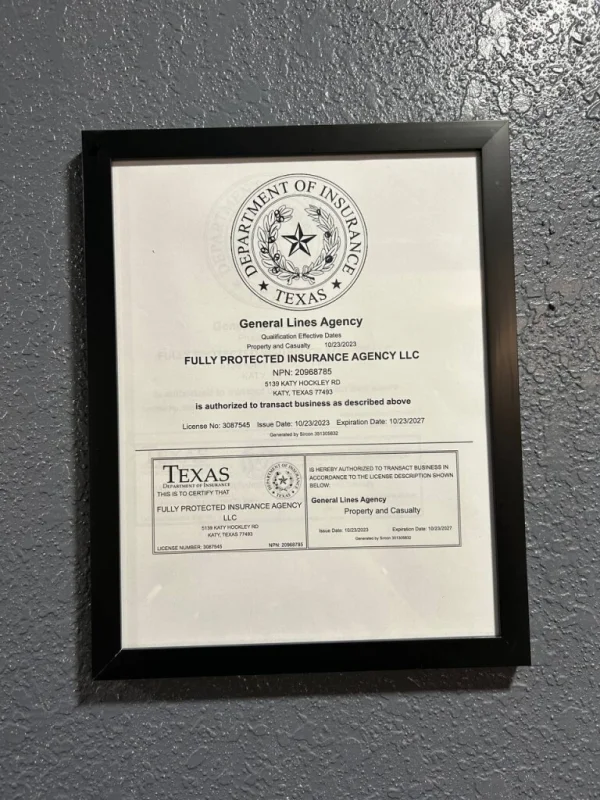
SR22 Certificate Mechanics and Regulatory Compliance
SR22 functions as continuous monitoring between insurers and Texas DPS. Technical implementation requires understanding:
Electronic filing infrastructure: Texas uses AIPSO (Automobile Insurance Plans Service Office) for SR22 data exchange. Carriers submit XML-formatted certificates via secure portal. DPS confirmation processing averages 36-72 hours for electronic submissions. Legacy paper SR22 filings extend processing to 8-12 business days. Request electronic filing specifically to minimize activation timeline.
Lapse notification protocols: Texas Insurance Code §601.156 requires insurers report policy cancellations within 10 calendar days. This triggers automatic administrative license suspension per Transportation Code §521.344. The reporting is automated—carrier policy management systems interface directly with DPS databases. Even single-day coverage gaps generate suspension notices.
SR22 duration calculation methodology: Supervision periods in Texas measure from filing date, not violation date. DUI convictions typically mandate 36 months. Multiple moving violations often require 24 months. Critical distinction: Any lapse resets the clock to day zero. A driver with 30 months completed who lapses coverage returns to 0/36 months, not 6/36 months remaining.

Unlicensed Driver Policy Structures and Legal Framework
Texas law permits vehicle insurance without valid operator licenses under specific conditions. Policy architecture differs from standard forms:
Named driver exclusion endorsements: These forms (typically ISO PP 03 29 or carrier-specific equivalent) explicitly list the vehicle owner as covered while excluding driving privileges. This protects vehicle asset value while acknowledging legal inability to operate. Premium loading for such endorsements typically adds 32-48% to base rates—lower than full high-risk surcharges but higher than standard pricing.
Parked vehicle comprehensive-only coverage: Some carriers offer storage or parked vehicle policies providing comprehensive-only protection. These policies explicitly exclude liability and collision. Monthly premiums typically range $42-$68 for comprehensive-only coverage on Trax models valued at $10,000-$15,000. This becomes viable for unlicensed owners maintaining vehicles for future use.
Title verification requirements: Unlicensed driver policies mandate strict ownership documentation. Acceptable proof includes: clear title listing applicant as owner, registration showing applicant name, or notarized bill of sale dated within 30 days. Insurers verify title status through state DMV databases to prevent fraud scenarios.
Premium Optimization Through Technical Adjustments
Systematic approaches to reducing Trax SR22 insurance costs:
Deductible Structuring Analysis
Mathematical modeling of deductible impact: Collision/comprehensive deductibles directly affect premium calculations. For SR22-required Trax policies:
$500 deductible baseline: $297/month average
$1,000 deductible: $255/month average (14.1% reduction)
$2,000 deductible: $227/month average (23.6% reduction)
Break-even analysis: Choosing $2,000 over $500 deductible saves $840 annually. If claim frequency averages once per 4.5 years (typical Texas driver), the additional $1,500 out-of-pocket cost ($2,000 deductible minus $500 deductible) is recovered in 1.8 years through premium savings. For drivers with emergency fund reserves, high deductibles provide statistically advantageous risk transfer.
Coverage Limit Calibration
Liability limit selection based on asset exposure: Texas minimum limits (30/60/25) provide inadequate protection for most assets. Average bodily injury settlement in Texas: $32,400. Serious injury claims frequently exceed $150,000. Lawsuit risk analysis requires matching liability limits to total attachable assets.
Asset calculation methodology: Sum home equity + liquid savings + investment accounts + retirement accounts (often partially shielded but consider as exposure). If total attachable assets equal $125,000, carry minimum 100/300/100 limits. Premium increase from 30/60/25 to 100/300/100 averages $32-$47/month—insignificant cost for substantial asset protection.
Discount Stacking Strategies
Texas-mandated defensive driving course credit: Completion of six-hour approved course qualifies for premium reduction per Insurance Code §1001.007. Discount range: 5-10% maintained for three years. On $3,200 annual premium, 10% discount provides $320/year savings. Course cost: $25-$30. ROI: 320-427% over three-year discount period.
Multi-policy bundling mathematics: Renters insurance ($180-$240 annually) triggers multi-policy discount averaging 7-12% on auto premium. For $3,200 annual auto premium, 10% discount equals $320 savings. Net cost after adding renters: $3,200 - $320 + $210 = $3,090. Effective result: Renters coverage at no net cost plus $110 annual savings on auto premium.
Technical Underwriting Analysis for Trax SR22 Quote
Carrier Selection Methodology
Systematic evaluation of insurers for high-risk Trax policies:
Financial strength rating analysis: A.M. Best ratings indicate insurer solvency and claims-paying capacity. Non-standard market carriers typically maintain B++ to A- ratings compared to A+ for preferred-risk carriers. However, B++ rated carriers offering approval outperform A++ carriers declining coverage. Minimum acceptable rating: B+ or higher. Verify at ambest.com prior to policy purchase.
Claims processing capability metrics: Non-standard market insurers sometimes employ extended claims investigation due to elevated fraud rates within their risk pools. Key performance indicator: average claim settlement timeline. Industry standard: 14-21 days for liability claims, 7-14 days for comprehensive claims. Request claims settlement statistics during agency consultation.
Complaint index evaluation: State insurance department complaint ratios provide insight into carrier practices. Ratio calculation: complaints per 1,000 policies. Texas Department of Insurance publishes annual complaint ratio data. Ratios exceeding 2.5 suggest elevated customer satisfaction issues. Access reports at tdi.texas.gov/consumer.
Geographic service area verification: Confirm carrier files SR22 certificates in all 254 Texas counties. Some regional insurers restrict operations to specific areas. Moving outside covered area during SR22 period creates complications requiring policy cancellation and new carrier sourcing—potentially triggering coverage gaps.
Rapid Implementation Protocol
Systematic approach to securing Trax SR22 coverage efficiently:
Pre-quote documentation assembly: Compile before initial carrier contact: 17-character VIN, driver's license or state ID number, complete 5-year Texas driving record (order from DPS), current proof of vehicle ownership, details on all household residents with licenses. Complete documentation reduces underwriting timeline by 3-5 business days.
Multi-carrier quote acquisition strategy: Contact minimum four non-standard market sources: two direct non-standard carriers (The General, Direct Auto), one independent agency representing 8+ carriers, one regional Texas specialist. Premium variance of 28-42% between carriers for identical coverage is standard in high-risk markets.
Policy activation verification procedure: After purchase, implement three-step verification: (1) Request email confirmation of policy with policy number within 1 business day, (2) Verify SR22 filing date in writing from carrier, (3) Contact Texas DPS at (512) 424-2600 five business days post-filing to confirm DPS receipt. This catches filing errors before license complications arise.

FAQ: Technical Insurance Specifications
What quantitative premium difference exists between standard and SR22-required Trax policies?
Quantitative analysis demonstrates SR22 surcharges ranging 55-87% above baseline rates. Standard market premium of $1,600 annually becomes $2,480-$2,992 with SR22 designation—representing $880-$1,392 annual increase. Variation depends on specific violation severity and carrier underwriting models.
How does SR22 filing affect insurance history post-supervision period?
SR22 certificate itself removes from record upon supervision period conclusion. However, underlying violations persist per DPS retention schedules: Class C misdemeanors (most moving violations) maintain 3-year retention, DUI convictions maintain 10-year retention. Premium impacts diminish gradually as violation ages.
What constitutes legal policy transfer during SR22 supervision?
Legal transfer requires: (1) New carrier SR22 filing activated before old carrier cancellation, (2) Minimum 48-hour overlap coverage period, (3) Written confirmation from both carriers documenting continuous coverage. Single-day gap constitutes lapse triggering suspension regardless of intent to transfer.
What documentation verifies unlicensed status for insurance underwriting?
Acceptable documentation includes: Expired license showing expiration exceeding 60 days, state ID card issued in lieu of license, DPS suspension notification documenting active suspension, affidavit of unlicensed status (carrier-specific forms). Requirements vary by underwriter—verify specific carrier standards during quote process.