



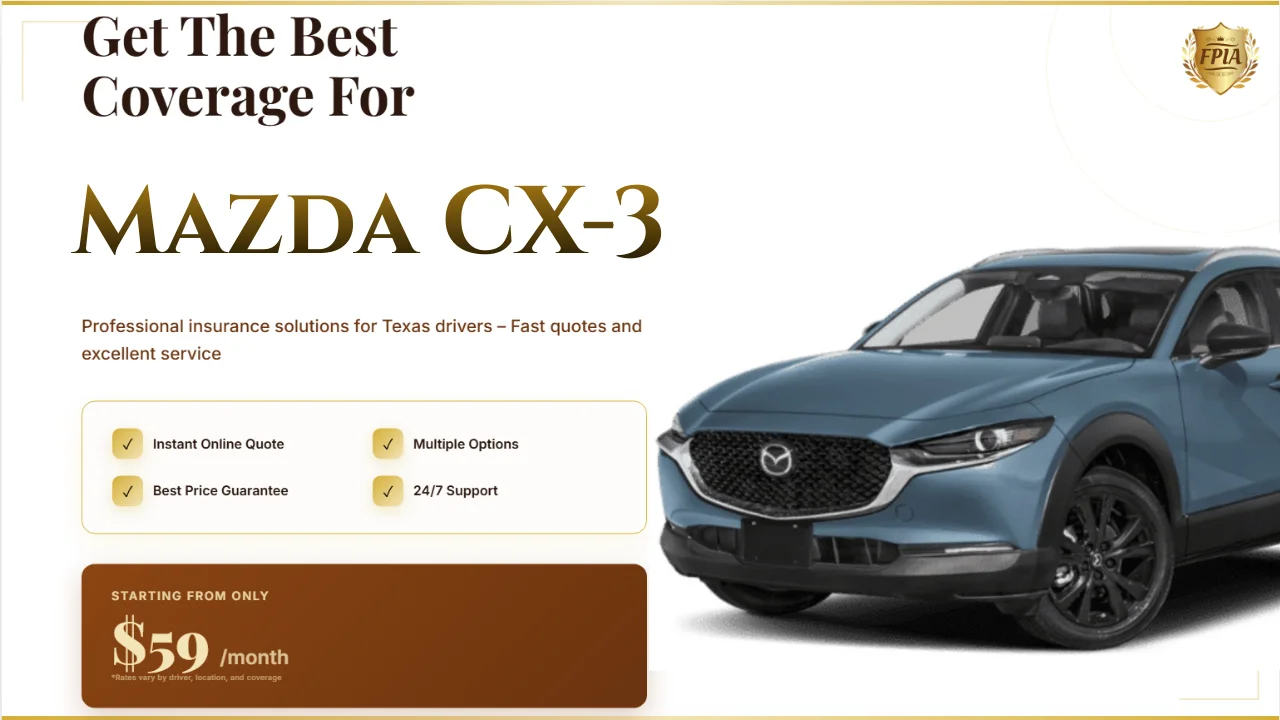
Mazda CX-3 Insurance Cost in Texas: Compare Rates & Save
Published: January 28, 2026
Navigating the complex landscape of Mazda CX-3 insurance cost in Texas requires a deep dive into actuary data, vehicle safety specifications, and regional risk assessments. For Texas drivers, the Mazda CX-3 represents a unique blend of sporty performance and subcompact utility, but these same characteristics influence how underwriters calculate annual premiums. Unlike standard sedans, this crossover’s repairability index and safety tech integration play pivotal roles in determining your monthly out-of-pocket expenses. We analyze the average insurance rates based on technical data points including crash test ratings from the Insurance Institute for Highway Safety (IIHS) and the cost of parts for its Skyactiv-G engine components.
The state of Texas presents a volatile market for auto insurance due to high-density urban traffic in hubs like Houston and Dallas, coupled with extreme weather patterns. When calculating the Mazda CX-3 insurance cost, carriers look beyond the driver’s credit score; they scrutinize the vehicle’s i-Activsense safety suite, which includes Smart City Brake Support and Blind Spot Monitoring. While these features reduce the probability of a collision, they simultaneously increase the cost of claims due to the sophisticated sensors embedded in the bumpers and windshields. Understanding this technical trade-off is essential for any owner looking to save on Mazda insurance in Texas.
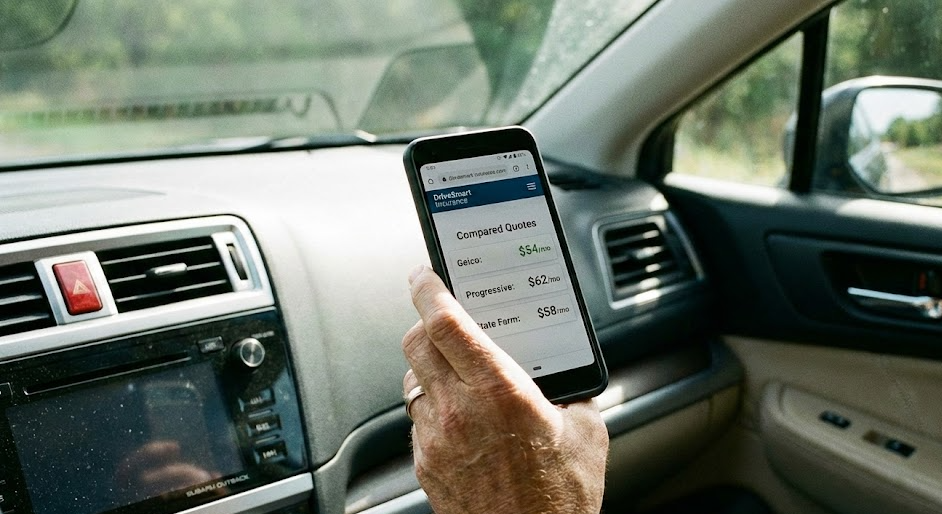
Furthermore, the insurance premium for a Mazda CX-3 is highly sensitive to the specific trim level. A base Sport trim will typically command a lower comprehensive premium compared to a Grand Touring model equipped with AWD (All-Wheel Drive). The complexity of the AWD drivetrain adds a layer of mechanical risk and higher replacement costs in the event of a total loss. By breaking down these technical variables, we provide a blueprint for Texas motorists to optimize their coverage without sacrificing the financial protection required by Texas state law.
Technical Analysis: Variables Influencing Mazda CX-3 Premiums in Texas
From a technical standpoint, the Mazda CX-3 is classified as a subcompact crossover, a segment that generally enjoys competitive insurance rates due to high safety standards. However, the cost of insurance in Texas is influenced by the "Loss Cost" data specific to the 78XXX and 77XXX zip codes. Actuaries monitor the frequency of claims and the severity of payouts for this specific model. For the Mazda CX-3, the data suggests a moderate claim frequency but a slightly higher-than-average claim severity for front-end collisions due to the specialized LED lighting and radar systems.
The Texas Department of Insurance mandates minimum liability limits of 30/60/25 ($30,000 for injuries per person, $60,000 per accident, and $25,000 for property damage). While these are the legal minimums, a technical risk assessment suggests that Mazda CX-3 owners should opt for higher limits. Given that the average cost of a new vehicle in Texas now exceeds $45,000, a 25k property damage limit is technically insufficient. Increasing these limits marginally impacts the Mazda CX-3 insurance cost while providing an exponential increase in asset protection.
- Safety Ratings: The CX-3’s consistent "Top Safety Pick" status from the IIHS directly correlates to lower Personal Injury Protection (PIP) costs.
- Theft Rates: Unlike high-performance sports cars, the Mazda CX-3 has a relatively low theft frequency in Texas, which keeps the Comprehensive Coverage portion of the premium affordable.
- Engine Displacement: The 2.0L 4-cylinder engine is viewed by insurers as a low-risk powertrain, avoiding the "high-performance" surcharges often applied to turbocharged or V6 engines.
Texas State Comparisons: Mazda CX-3 vs. The Competition
When comparing the Mazda CX-3 insurance cost in Texas against its primary rivals like the Honda HR-V or the Hyundai Kona, the Mazda often sits in the middle of the spectrum. The Honda HR-V typically sees lower repair costs due to a more extensive third-party parts market, whereas the Mazda relies heavily on OEM (Original Equipment Manufacturer) components to maintain its "Kodo" design aesthetic. This reliance on OEM parts can increase Collision Coverage premiums by 5-8% compared to more utilitarian competitors.
In the Texas market, uninsured motorist coverage is a technical necessity. Statistics indicate that approximately 20% of drivers in Texas operate without valid insurance. For a Mazda CX-3 owner, adding Uninsured/Underinsured Motorist (UM/UIM) coverage is a strategic move. Because the CX-3 features lightweight high-tensile steel, even minor impacts from an uninsured vehicle can lead to structural repairs that exceed the vehicle's "Diminished Value" threshold. Managing these technical risks through a comprehensive insurance policy is the only way to ensure long-term value retention for your vehicle.
Regional variations within Texas also provide significant data fluctuations. For instance, a Mazda CX-3 owner in Austin may pay 15% less than an owner in Houston, where flooding risks (Comprehensive claims) and traffic density (Collision claims) are significantly higher. Analysts recommend that drivers in flood-prone areas of the Gulf Coast prioritize a $250 or $500 deductible for Comprehensive coverage to mitigate the technical risk of total loss due to water damage.
Deep Dive into Mazda CX-3 Coverage Components
Comprehensive Coverage for the Mazda CX-3
This covers non-collision events such as theft, vandalism, and the infamous Texas hailstorms. For the Mazda CX-3, Comprehensive insurance is vital because of the "Active Driving Display" (Heads-up Display) and sunroof options available on higher trims. Replacing a cracked windshield that houses sensors for Lane Departure Warning can cost upwards of $1,200, making a low-deductible comprehensive plan a technically sound investment.
Collision Coverage and Repair Dynamics
Collision coverage handles damages sustained in an accident with another vehicle or object. The Mazda CX-3 utilizes a specific unibody construction designed to absorb energy. While safe for passengers, these "crumple zones" often result in the vehicle being declared a total loss in moderate-speed accidents. Insurers factor this "total loss threshold" into the Collision insurance rates for Texas drivers.
Personal Injury Protection (PIP) in the Lone Star State
Texas is a "fault" state, but PIP is an optional (though must be offered) coverage that pays for medical expenses regardless of who caused the accident. Given the Mazda CX-3's high safety ratings, PIP premiums remain stable. However, technical experts suggest a minimum of $2,500 in PIP to cover the immediate medical deductibles that follow a high-impact collision on Texas highways.
Evaluating the Best Providers for Mazda Insurance in Texas
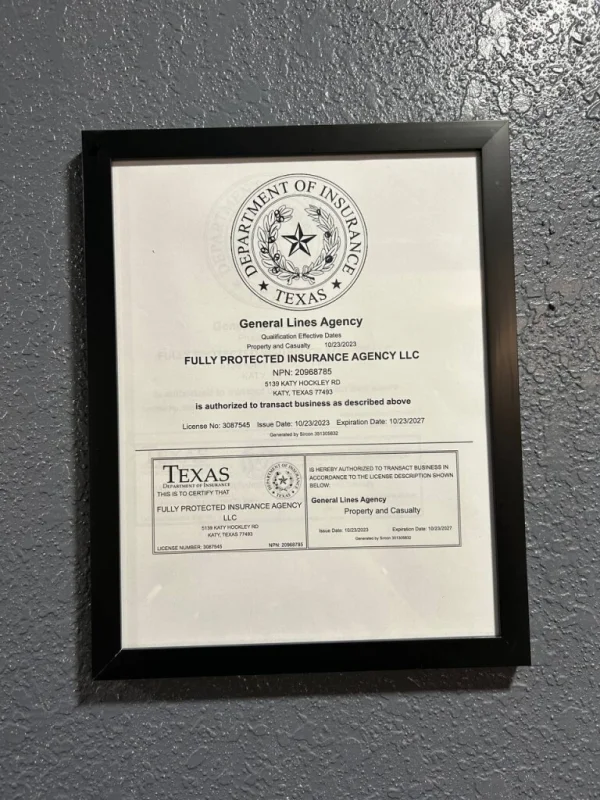
Selecting a provider for your Mazda CX-3 insurance involves more than just looking at the monthly premium. You must evaluate the carrier’s "AM Best" rating (financial stability) and their "Claims Satisfaction Index." In Texas, specialized agencies like Fully Protected Insurance offer a technical advantage by comparing multiple "A-rated" carriers simultaneously. This allows the consumer to find the intersection between low cost and high technical reliability in claims handling.
When requesting a Mazda insurance quote, ensure you provide the VIN (Vehicle Identification Number). The VIN allows the insurance agent to identify specific safety packages installed on your CX-3, such as the "Premium Package" or "i-Activsense," which can trigger safety equipment discounts. In the Texas market, digital-first agencies have optimized their algorithms to reward Mazda owners who maintain a clean driving record and high credit score, often resulting in "preferred" tier pricing.
[Get Your Personalized Mazda CX-3 Quote Here]

Final Technical Assessment: Maximizing Your Savings
The Mazda CX-3 insurance cost in Texas is a manageable variable for drivers who understand the technicalities of the insurance market. By leveraging telematics programs—where a device monitors your braking and acceleration—you can potentially reduce your premium by up to 30%. Given that the CX-3 is often driven by safety-conscious individuals, telematics represents a logical step in data-driven insurance savings.
In conclusion, while Texas presents certain challenges, the Mazda CX-3 remains an insurance-friendly vehicle. Focus on bundling policies (Auto + Renters/Homeowners), maintaining a high deductible if your emergency fund allows, and consistently shopping your rate every six months. This technical approach ensures that you are never overpaying for the protection your Mazda deserves.
How to Secure Low Rates Today
Don't leave your Mazda CX-3 insurance to chance. The Texas market is competitive, and rates change based on quarterly loss data. By acting now and utilizing a localized agency that understands the specific risks of the Texas landscape, you can lock in a rate that reflects your vehicle's safety and your own responsible driving habits. Start your technical comparison today and drive with the confidence that you are fully protected.

FAQ: Frequently Asked Questions About Mazda CX-3 Insurance
Is the Mazda CX-3 more expensive to insure than the Mazda CX-5?
Generally, the Mazda CX-3 is slightly cheaper to insure than the larger CX-5. This is due to its lower MSRP (Manufacturer's Suggested Retail Price) and the fact that it carries a lower liability risk due to its smaller size and weight. However, the difference is often less than 10%.
Does Texas require specific coverage for leased Mazda CX-3s?
Yes, if you are leasing a Mazda CX-3 in Texas, the lienholder will typically require "Full Coverage," which includes both Collision and Comprehensive insurance. Furthermore, they usually mandate a maximum deductible of $500 or $1,000 and may require Gap Insurance to cover the difference between the car's value and the lease balance.
Can I get a discount for the i-Activsense safety features?
Absolutely. Most major insurers in Texas offer discounts for advanced safety features like automatic emergency braking and lane departure warnings. Since these features are standard or available on most CX-3 models, they serve as a primary technical lever to lower your annual insurance cost.
What happens to my Mazda insurance rate if I move within Texas?
Your rate will likely change. Moving from a rural area like Lubbock to a high-traffic urban center like Houston or San Antonio will almost certainly increase your Mazda CX-3 insurance cost due to the increased statistical probability of an accident or theft in more populated regions.